702

Author
infoAliment
Share on


Published on
2026 March 09
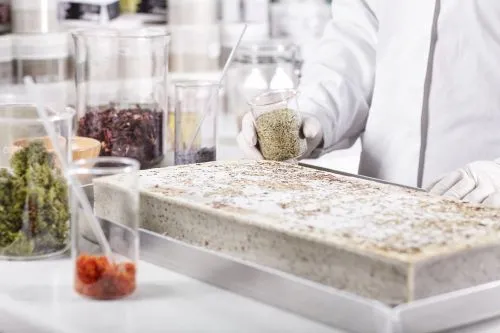
Recent advances in biotechnology are opening a new direction for the food industry: the production of ingredients in bioreactors through precision fermentation. This technology enables the production of food compounds—such as proteins, specialty sugars, enzymes, or flavors—without relying on traditional agriculture or animal farming.
Precision fermentation uses genetically programmed microorganisms, such as yeasts or bacteria, to produce specific molecules under controlled conditions. Inside industrial bioreactors, these microorganisms convert simple carbon sources, such as sugars, into complex food ingredients. The process is similar to traditional fermentations used for centuries to produce beer or yogurt, but it is far more precise and oriented toward targeted molecules.
In recent years, this technology has begun to be used to produce high-value ingredients. For example, certain biotechnology companies produce proteins identical to those found in milk, which are used in dairy products without animal origin. Other applications include the production of natural flavors, vitamins, or enzymes used in food processing.
A major advantage of precision fermentation is resource efficiency. Production in bioreactors may require less water and less agricultural land, and can reduce emissions associated with intensive agriculture. In addition, processes take place in controlled environments, allowing for consistent quality and high traceability of ingredients.
Although the technology is still in a phase of rapid development, numerous companies in the biotechnology and food sectors are investing in such processes. In the long term, precision fermentation could become an important component of the global food system, complementing traditional agricultural production and contributing to the diversification of ingredient sources.
(Photo: Freepik)
Did you learn something new from this article?
Read also: