483

Author
infoAliment
Share on


Published on
2026 March 06
Accelerated urbanization and the rapid growth of online commerce are driving the emergence of a new logistical model in the food industry: urban food logistics. In this system, the production and processing of certain food products are relocated closer to consumption areas through mini-factories or urban processing units.
The model is inspired by the “micro-fulfillment” concept, already widely used in online retail. Instead of large industrial facilities located far from cities, compact production or processing units are established within urban or peri-urban areas. These units can produce or process smaller volumes of food, but with a high capacity to respond quickly to market demand.
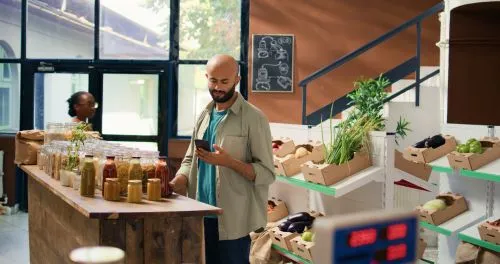
Urban mini-factories are particularly used for perishable or fast-consumption products, such as bakery goods, dairy products, ready-to-eat meals, or fresh beverages. Their proximity to consumers allows for shorter transportation times and helps preserve product freshness.
From a logistical perspective, these facilities are integrated into a digital system that connects online orders, rapid delivery services, and local processing operations. Demand data are analyzed in real time, enabling production to be adjusted daily or even on an hourly basis.
Beyond logistical advantages, this model also offers sustainability benefits. Shorter transport distances contribute to reducing emissions generated by distribution, while local production can help limit food waste by aligning production volumes more closely with actual demand.
Several pilot projects combining micro-scale food production, urban storage, and rapid delivery services are already emerging in European and North American cities. If these models prove scalable, they could redefine the logistical structure of the food industry, transforming cities not only into centers of consumption but also into active nodes of food production.
(Photo: Freepik)
Did you learn something new from this article?
Read also: