816

Author
infoAliment
Share on


Published on
2026 May 06
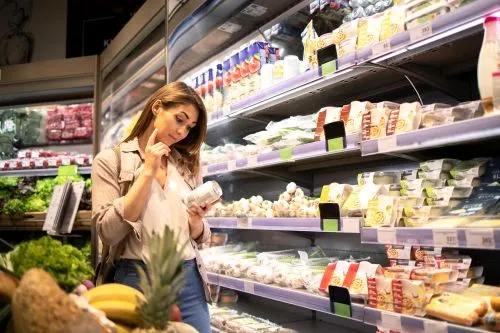
The food industry is entering a stage where shelf life is no longer a fixed date printed on the label, but a dynamic parameter calculated in real time. Developments in sensors, smart labels, and artificial intelligence are transforming how product freshness is assessed.
At present, a significant share of food waste is generated by conservative estimations of shelf life. According to the European Commission, approximately 10% of food waste in the EU is linked to the misinterpretation of “best before” labels. Emerging technologies aim to address this issue through continuous monitoring.
Time-Temperature Indicators (TTI) are already used in cold chains to record the temperature history of products. These labels change color depending on cumulative exposure to non-compliant temperatures. At the same time, smart labels based on chemical sensors can detect changes in gas composition inside the packaging — a direct indicator of product degradation.
A MarketsandMarkets report estimates that the smart packaging market will exceed USD 38 billion by 2030, driven by the need for traceability and loss reduction. Combined with AI algorithms, this data enables the dynamic recalculation of consumption timelines based on actual storage and transport conditions.
For retailers, the advantages are twofold: stock optimization and loss reduction. For consumers, this means more accurate information and safer products. At the same time, supply chains become more transparent, and logistical decisions can be adjusted in real time.
The major challenge remains standardization and regulatory acceptance. Current systems are built on fixed frameworks, and integrating a dynamic model requires both legislative and technological adaptation.
Shelf life is no longer a rigid limit, but becomes a continuously calculated variable. In this context, freshness is no longer estimated — it is measured.
(Photo: Magnific)
Did you learn something new from this article?
Read also: