1213

Author
infoAliment
Share on


Published on
2026 May 14
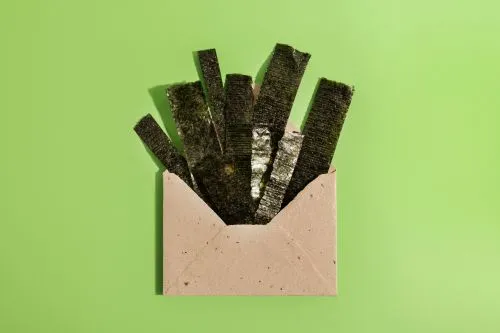
The global food industry is facing growing pressure to reduce plastic packaging, amid new European sustainability regulations and changing consumer behavior. In this context, edible and biodegradable packaging is beginning to move from the experimental stage toward concrete commercial applications, becoming one of the most closely watched areas of innovation in the food sector.
Among the most widely explored solutions are films based on seaweed, starch, plant cellulose, and natural proteins. These materials can partially replace conventional packaging for products such as dairy items, fruits, snacks, and ready-to-eat foods. Unlike traditional plastic, they offer the advantage of rapid degradation and, in some cases, can even be consumed together with the food product itself.
Seaweed is considered one of the most promising resources. It grows rapidly, does not require agricultural land, and can generate biopolymers used in flexible films and food capsules. Several European and Asian companies are already developing algae-based packaging for beverages, sauces, and fresh products.
Another important direction is the use of milk or whey proteins to create biodegradable films with strong oxygen barrier properties. Research shows that these solutions can help extend the shelf life of food products without relying on petroleum-based materials.
At the same time, the starch industry is developing compostable materials derived from corn, potatoes, or cassava. Although many of these packaging solutions do not yet offer the same mechanical resistance as conventional plastic, technologies are evolving rapidly, and costs are beginning to decrease as production scales up.
The major challenge remains industrial scalability. Biodegradable packaging is still more expensive than traditional plastic, while industrial composting infrastructure remains underdeveloped in many European countries. In addition, some biodegradable materials require special conditions for complete degradation, which may create confusion among consumers.
However, the European Union is accelerating the transition toward sustainable alternatives through restrictions on single-use plastics and increasingly strict recycling targets. In this context, food companies are investing heavily in new solutions to reduce environmental impact and respond to the growing demand for eco-friendly products.
For the industry, the packaging of the future no longer means only product protection, but also reducing environmental footprint. In the coming years, European consumers may increasingly see products packaged in materials that naturally degrade or can even be consumed together with the food itself.
(Photo: Magnific)
Did you learn something new from this article?
Read also: