559

Author
infoAliment
Share on


Published on
2026 April 28
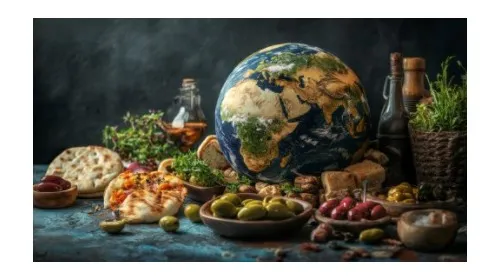
Global food supply chains are entering a new phase of strategic realignment, and Europe is finding itself in an increasingly vulnerable position between the world’s major trading blocs.
In recent years, trade tensions between the United States and China have directly affected global flows of grains, meat, and processed food products. The tariffs imposed by both sides have redirected significant volumes toward other markets, including the European Union.
At the same time, the war in Ukraine has destabilized one of the world’s most important suppliers of grains and oilseeds, while logistics corridors in the Black Sea region have become a major geopolitical factor for European food security.
On another front, the trade agreement between the European Union and Mercosur continues to generate controversy.
Potential imports of beef, sugar, and agricultural products from Brazil and Argentina are viewed by European farmers as a direct threat to local competitiveness.
In this context, major global food powers are beginning to secure their supply chains more aggressively.
China is investing heavily in agricultural land and global logistics infrastructure.
The United States is protecting domestic producers through increasingly aggressive trade policies.
Europe, meanwhile, is trying to maintain both high environmental standards and economic competitiveness — a difficult balance to sustain.
For Romania, the implications are direct.
The country remains one of the largest agricultural producers in Eastern Europe, yet it continues to export large volumes of raw materials while importing high-value processed products.
In the future, food competition will no longer depend exclusively on farm productivity.
It will depend on market access, control over logistics, and global trade power.
And Europe’s food supply may increasingly be shaped outside Europe.
(Photo: Freepik)
Did you learn something new from this article?
Read also: