376

Author
infoAliment
Share on


Published on
2025 October 24
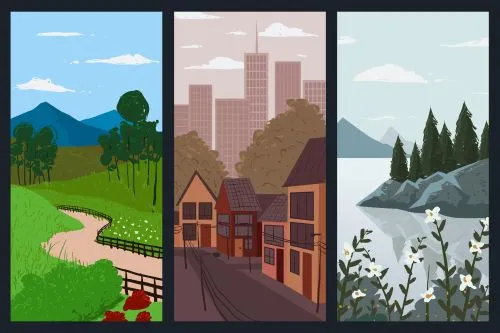
In recent years, food in Romania has ceased to be merely a necessity. It has become a conscious choice, a form of identity, and increasingly, a marker of social status. The gap between urban and rural consumers is widening—not only in purchasing power, but also in their attitudes toward food, health, and the origin of products.
The City: Food as Experience and Lifestyle Statement
The urban consumer has evolved into an informed actor, connected to global trends: seeking clean labels, certified local products, plant-based alternatives, and additive-free formulas. According to a NielsenIQ survey (2024), over 68% of Romanians living in cities read labels before purchasing a product, and 41% say they are willing to pay more for food perceived as “natural” or “healthy.”
In major cities, food has become part of a lifestyle. Farm-to-table restaurants, organic shops, and clean local markets have turned into symbols of food consciousness. Choosing local products is no longer just a matter of patriotism but also of trust: urban consumers seek traceability, safety, and transparency.
However, this behavior comes with a certain paradox. Many urban consumers claim to prefer “Romanian foods,” yet continue to buy international brands—often due to a lack of clear options or effective communication from local producers. In the end, perception weighs more than actual origin.
The Village: Tradition, Self-Sufficiency, and Slow Adaptation
In rural areas, the relationship with food remains pragmatic and traditional. A large share of the rural population still produces at least part of its own food—milk, eggs, vegetables, pork, or poultry. This self-sufficiency provides stability and confidence but also creates distance from new food trends.
For many rural consumers, “clean” means “homemade,” not “free of additives.” Industrial products are sometimes viewed with suspicion, and purchasing decisions are driven more by price and proximity than by labels. However, change is visible: younger generations in rural areas are becoming more attentive to balanced nutrition and more receptive to messages about health and sustainability.
According to INS data (2024), the consumption of processed and semi-prepared foods is also increasing in rural areas, driven by economic migration and the rapid urbanization of peri-urban villages. The traditional dietary model is gradually blending with the urban one, generating a new hybrid food culture.
“Clean Label” and Health – A Bridge Between Two Worlds
The clean label—free from preservatives, colorants, and flavor enhancers—is becoming a common language between the two environments, but with different meanings. For urban consumers, it represents responsibility; for rural ones, a guarantee that “nothing extra” has been added. In both cases, the demand for transparency and simplicity is growing.
Amid the pandemic and increased online exposure, perceptions of health have changed dramatically: Romanians, regardless of background, now associate food more strongly with immunity, energy, and well-being. At the same time, demand is rising for functional foods—fortified dairy products, fermented goods, cold-pressed oils, and natural dietary supplements.
Food Education – The Invisible Divide
The greatest difference between urban and rural Romania is not economic, but informational. Access to food education remains limited in rural areas, where food marketing is minimal and awareness campaigns rarely reach. In cities, social networks and nutrition influencers have become the main sources of information—not always accurate, but effective.
Food education thus becomes a strategic factor: where it is missing, purchasing decisions remain instinctive; where it exists, they turn into conscious choices.
Conclusion: The Same Food, Two Romanias
Today, Romania lives a dietary duality: the urban seeks meaning, the rural seeks safety. One invests in the image of the product, the other in its tradition. Between them, a new generation of consumers is emerging—young people from both backgrounds—who no longer distinguish between village and city, but between authentic and artificial.
For producers, understanding these differences is not merely a matter of marketing, but of national strategy. In a world where food becomes a cultural symbol rather than just a commodity, the story of Romanian food is written through balance: between modernity and tradition, between perception and reality.
(Photo: Freepik)
Did you learn something new from this article?
Read also: