411

Author
infoAliment
Share on


Published on
2025 October 07
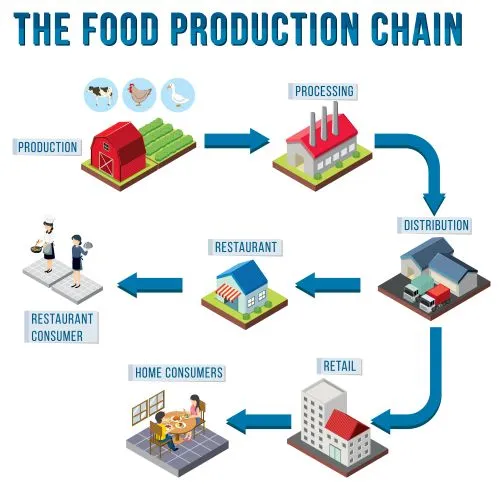
The circular economy has become one of the most important strategic directions of the European Union, with the food industry at the core of this transformation. As an EU member state, Romania is obliged to adapt its production, packaging, and distribution processes to the new principles of reuse, waste reduction, and full resource valorization.
According to the European Commission, more than 20% of food produced in Europe is lost annually along the supply chain, generating costs of approximately €140 billion and CO₂ emissions comparable to those of the aviation industry. In Romania, according to Eurostat, food losses exceed 14% of total production, concentrated mainly at the processing and distribution stages.
The implementation of circular economy principles requires a complete reconfiguration of how raw materials, packaging, and waste are managed. In the food industry, practical solutions include the use of by-products (whey, fats, vegetable residues) for the production of biogas, fertilizers, or animal feed.
FAO estimates that reusing organic waste within the food chain could reduce the carbon footprint by up to 40% and generate annual savings of over €75 billion at European level. In Romania, however, only 12% of companies in the food industry actively apply these practices, according to the Ministry of Agriculture and Rural Development (MADR).
“The circular economy must be seen as a tool for efficiency and competitiveness, not just for the environment,” states a recent World Bank report, highlighting the importance of partnerships between the private sector and local authorities for waste collection and recovery.
(Photo: Freepik)
Did you learn something new from this article?
Read also: