606

Author
infoAliment
Share on


Published on
2026 May 13
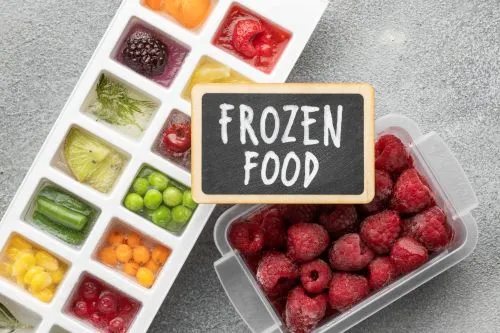
After decades in which consumer attention focused primarily on calories, sugar, and fat, the European food industry is beginning to face a new form of pressure: the climate impact of food products. The concept of the “climate label” — displaying a product’s carbon footprint on food packaging — is rapidly gaining ground in European debates on sustainability and transparency.
Several retail chains and food companies across Europe are already testing pilot systems that display information about the emissions generated by the production of a food item. The idea is simple: consumers should be able to compare not only nutritional value, but also environmental impact.
In practice, however, implementation is extremely complex. Calculating a carbon footprint requires evaluating the entire production chain — from agriculture and transportation to processing and packaging. Moreover, calculation methods differ between countries and companies, while the absence of a single European standard continues to generate controversy.
The meat and dairy industries are at the center of these debates. Animal-based products generally have higher climate footprints than plant-based alternatives, yet representatives of the sector warn that excessive simplification may create distorted perceptions. Factors such as regenerative agriculture, pasture use, and farm efficiency significantly influence final results.
Younger consumers, however, appear increasingly interested in this type of information. Market studies show that new generations take climate impact into account when making purchasing decisions, especially in major European cities.
For producers, climate labeling could become a new competitive instrument, similar to organic certifications or nutritional labels. Companies investing in emissions reduction and traceability could gain an important market advantage.
In Romania, discussions are still at an early stage, but European pressure will likely accelerate the introduction of climate reporting mechanisms within the local food sector as well. In the coming years, consumers may see on packaging not only how many calories a product contains, but also how much it “costs” the climate.
(Photo: Magnific)
Did you learn something new from this article?
Read also: