532

Author
infoAliment
Share on


Published on
2025 August 19
Current Situation of Imports
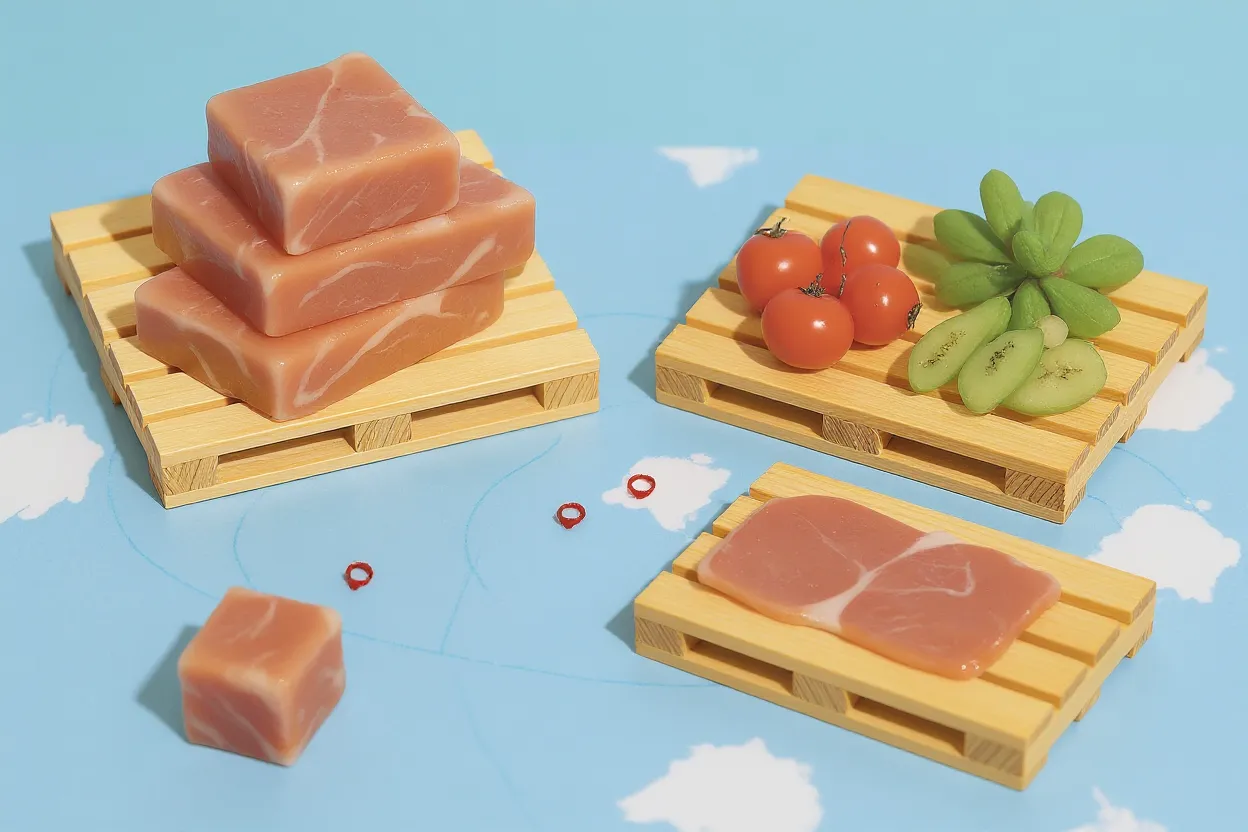
Recent data indicate that Romania imported food worth nearly €6 billion in the first half of the year, equivalent to an average of €33 million per day. This marks a significant increase compared to the previous year, when daily food imports averaged around €30 million, according to the available source.
Massive Agri-Food Imbalance
According to the Agrinnovator Report (“Romanian Product”) and the analysis conducted by Călin Costinaș, Romania faces an economic paradox: although it is one of the most fertile countries in Europe, it imports the majority of the food consumed domestically. Supermarket shelves are dominated by processed meat from Western Europe, dairy products from Central Europe, and canned goods from other states — all despite the local production potential.
In 2023, imports included high value-added products: biscuits (€130 million), canned vegetables (€56 million), and instant soups (€52 million) — while Romania exported raw materials such as wheat, failing to retain the added value of processing.
Bilateral Deficits with Neighboring Countries
Professor Tudorel Andrei highlights drastic increases in the trade deficit with countries such as Hungary, Poland, and Bulgaria. These deficits are concentrated in key food categories consumed daily.
- Hungary: the largest deficits are in meat and edible offal (≈ €1.64 billion), food waste/animal feed (≈ €1.33 billion), and dairy and eggs (≈ €1.67 billion).
- Poland: cereal- and pastry-based products and dairy/eggs account for deficits exceeding €725 million, while meat and offal add another €540 million.
- Bulgaria: vegetables, fruit, coffee, and fish are in deficit, totaling ≈ €11.6 billion cumulatively (across 24 agri-food categories analyzed).
Structural Causes: Lack of Domestic Processing
The main problem identified is the absence of a competitive agri-food processing industry in Romania. Farmers export raw materials, while processed, higher-value products are imported back — a costly and unsustainable model.
For example, Romania exports sunflower seeds but lacks the capacity to process them — they are processed abroad, and the transformation generates profits outside the country. Similarly, for pickles or canned products, the local industry lacks packaging capacity and logistics facilities, with these segments being dominated by imports.
Turning the Deficit into an Opportunity: Lessons from Poland
Costinaș firmly argues that the deficit is not an obstacle but a roadmap of opportunities. Unlike Poland — which turned a €1.4 billion deficit into a €7 billion surplus through investments in processing, branding, and infrastructure — Romania has the resources, but lacks coordination and financing.
Conclusions and Recommendations
- Current situation: Food imports of nearly €6 billion in H1, averaging €33 million/day;
- Deep imbalance: Romania imports high value-added products that could be produced domestically;
- Causes: The processing industry is fragile, underfunded, and fragmented;
- Solution: A coherent national strategy is needed, with public–private investments in processing, packaging, logistics, and access to finance;
- Model to follow: Poland — turning the deficit into a sustainable economic advantage.
(Photo: Freepik)
Did you learn something new from this article?
Read also: