598

Author
infoAliment
Share on


Published on
2026 May 13
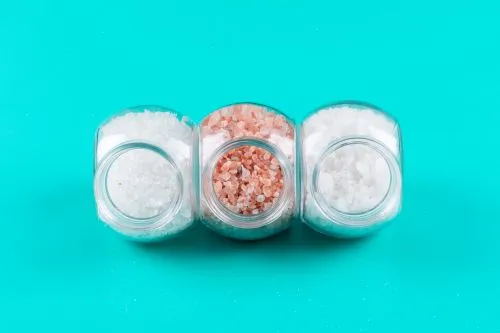
Reducing salt consumption has become one of the major priorities of the global food industry, amid the growing incidence of hypertension and cardiovascular diseases. The World Health Organization recommends a daily intake of no more than 5 grams of salt, yet in many European countries the average consumption significantly exceeds this threshold. For producers, the challenge is complex: how can sodium be reduced without compromising taste, texture, and product acceptability?
In recent years, the food industry has begun investing heavily in “smart reduction” salt technologies. One of the most widely used solutions is the partial replacement of sodium chloride with potassium chloride. The challenge is that potassium chloride can generate a bitter or metallic aftertaste, which is why companies are developing flavor systems capable of masking sensory differences.
Another important direction involves modifying the structure of salt crystals. Research shows that finer particles or specially shaped crystals can amplify the perception of saltiness, allowing for a reduction in total sodium content without major changes in taste. Some companies are already using microencapsulation technologies and uneven salt distribution to create “flavor peaks” perceived more intensely by consumers.
Artificial intelligence and digital sensory analysis are also beginning to play an important role. Algorithms are being used to optimize formulations and identify ingredient combinations that preserve flavor profiles while reducing sodium content.
At the same time, legislative pressure is increasing. Many European countries are promoting national salt reduction strategies, and the industry anticipates stricter regulations regarding ultra-processed foods. In this context, reformulation is becoming not only a marketing trend, but also a strategic necessity.
For consumers, the change could be almost invisible. The purpose of these new technologies is precisely to reduce sodium without significantly affecting the taste experience. For the industry, however, the stakes are enormous: whoever succeeds in combining health and food pleasure will gain a major competitive advantage in a market increasingly driven by nutrition and prevention.
(Photo: Magnific)
Did you learn something new from this article?
Read also: