434

Author
infoAliment
Share on


Published on
2026 April 15
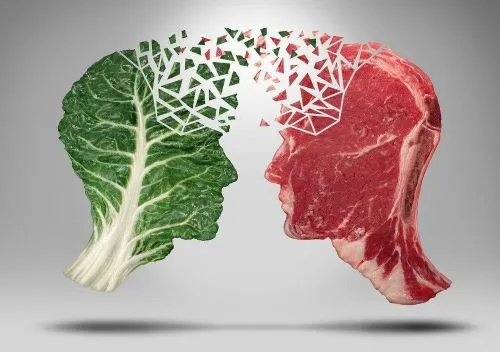
Food is no longer just a personal choice; it is increasingly becoming a form of social—and implicitly political—positioning. Differences between diets no longer reflect only nutritional preferences, but systems of values.
In recent years, the opposition between meat consumption and plant-based diets has moved beyond the realm of health. It has become a debate about the environment, ethics, sustainability, and even the global economy. For a growing segment of consumers, food choices convey a message: about climate impact, animal welfare, or individual responsibility.
This polarization is generating a new phenomenon: food identity. Eating in a certain way means belonging to a group and implicitly supporting a particular worldview. Retail, industry, and brand communication are rapidly adapting, building products and messages that respond to these identities.
At the same time, the risk of oversimplification emerges. The realities of agriculture and industry are complex, and reducing them to rigid oppositions can distort public perception. Consumption is neither entirely neutral nor entirely ideological.
For the industry, this shift means more than portfolio adaptation. It means understanding that purchasing decisions are no longer driven solely by price or quality, but also by values.
Food is no longer just nutrition. It becomes language. And within this language, every choice says something about who we are.
(Photo: AI GENERATED)
Did you learn something new from this article?
Read also: