440

Author
infoAliment
Share on


Published on
2026 January 27
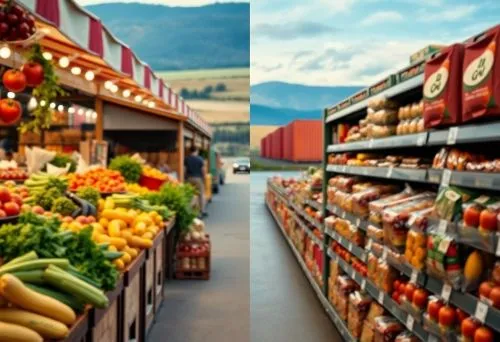
Transforming a traditional recipe into a standardised product compliant with European regulations is one of the most sensitive processes in the food industry. Caught between authenticity and compliance, producers are often forced to make difficult choices.
Standardisation requires fixed recipes, clearly defined processing parameters, strict traceability, and documented food safety. From a market perspective, the advantages are evident: access to modern retail, export opportunities, larger volumes, and increased consumer trust.
However, this process can dilute product identity. Adjusting a recipe for stability, uniformity, or shelf life may alter flavour, texture, and even the perception of what is considered “traditional.” In the case of dairy or meat products, seemingly minor technological interventions can have major effects on the sensory profile.
Another sensitive issue is the loss of natural variability. Tradition implies seasonal differences, variations in raw materials, and the influence of microclimate. Standards, by contrast, demand predictability. For some artisanal producers, this transition means sacrificing uniqueness in favour of commercial stability.
On the other hand, standardisation can preserve recipes that might otherwise disappear. Integrating them into a legal and economic framework provides continuity, visibility, and protection, including through quality schemes or geographical indications.
The key is not choosing between tradition and regulation, but finding a balance between the two. Modern technology now allows for more refined adjustments, minimal intervention, and processes that respect the spirit of the original recipe.
Ultimately, tradition is not lost when it is intelligently standardised. It is lost only when it is oversimplified.
(Photo: Freepik)