382

Author
infoAliment
Share on


Published on
2026 February 18
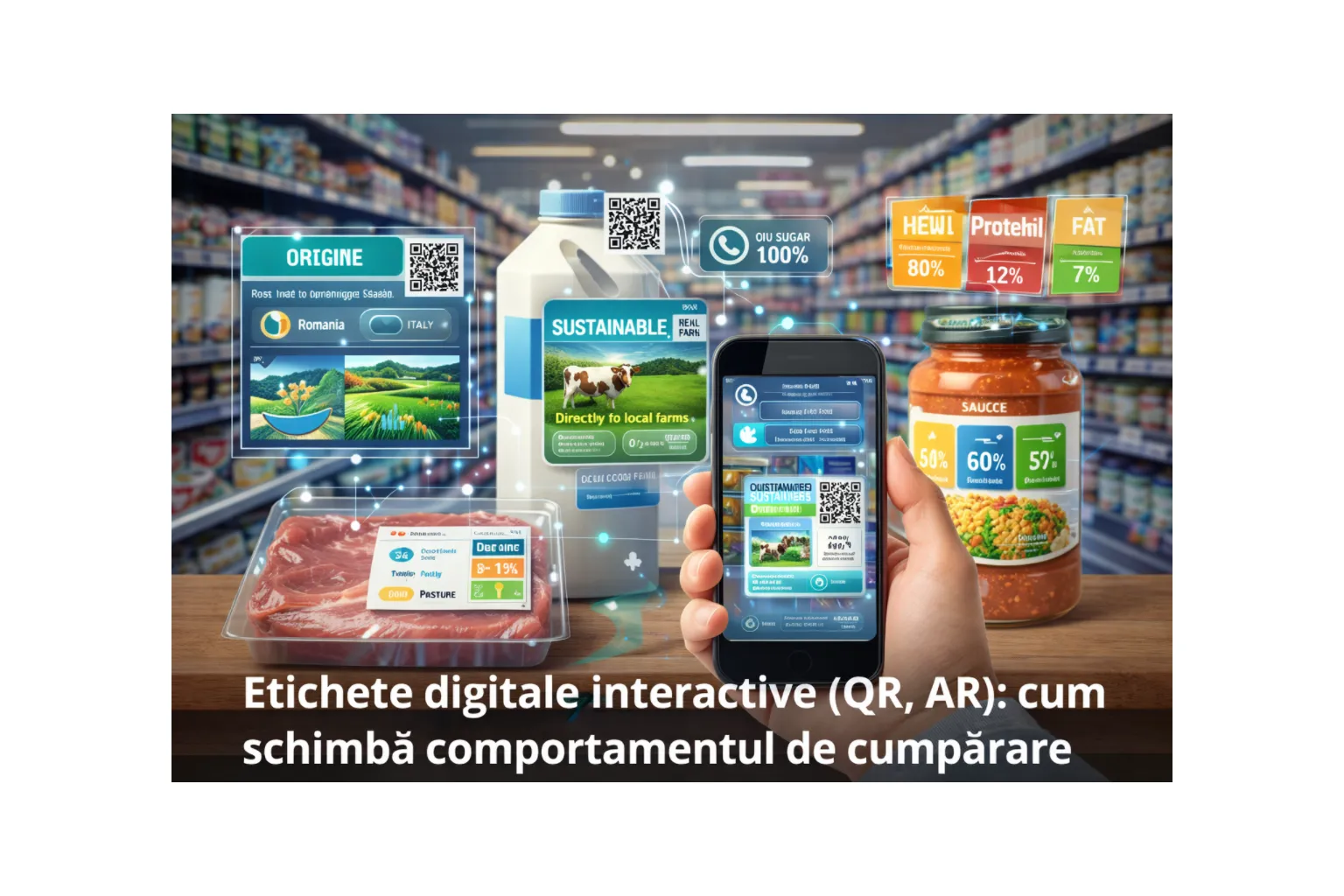
The traditional label is rapidly evolving toward a digital format, and QR codes and augmented reality are transforming packaging into a platform for direct communication with the consumer. Instead of limited printed information, brands can provide access to traceability, recipes, certifications, and even stories about origin.
This transparency increases trust, especially in the context of concerns related to sustainability and ingredients. Consumers can instantly verify the origin of raw materials or the carbon impact, and the purchasing decision becomes more informed.
Augmented reality adds an experiential dimension: the label becomes interactive, explains the product, shows how it is used, or creates a visual story. For brands, this means stronger customer loyalty and differentiation on a crowded shelf.
Moreover, digital labels allow information to be updated without changing the physical packaging. In the case of reformulations or food alerts, messages can be adapted in real time.
In the long term, the label could become personalized: consumers will see different information depending on dietary preferences, allergies, or lifestyle. Packaging will no longer be just informative, but intelligent – an interface between producer and customer.
(Photo: AI GENERATED)
Did you learn something new from this article?
Read also: