633

Author
infoAliment
Share on


Published on
2026 April 22
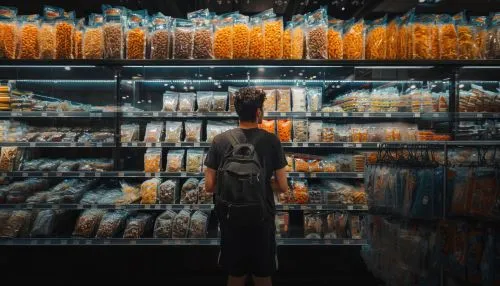
In the food industry, what reaches store shelves represents only a portion of the actual production flow. A significant component remains invisible to consumers: losses, by-products, and volumes eliminated from the commercial chain.
International data shows that between 20% and 30% of global food production is not directly utilized for consumption. In the meat industry, losses occur at every stage: from slaughtering and cutting to storage and distribution. Size differences, commercial standards, and shelf-life requirements generate constant volumes of products that never reach retail.
This phenomenon does not necessarily mean waste in the traditional sense. Part of these flows is redirected toward secondary processing, animal feed, or industrial use. However, the economic value remains lower than that obtained from the final product intended for consumption.
The concept of the “waste economy” describes precisely this area: a parallel economy built on the monetization of losses. In recent years, pressure for efficiency has pushed companies to optimize these flows, transforming losses into alternative revenue sources.
At the same time, supply chains are becoming increasingly strict. Retail imposes uniform standards, which amplifies the exclusion of products that do not meet specific requirements.
In this context, invisible food is not only a sustainability issue, but also an economic structural issue. The difference between profit and loss is often determined within these secondary flows.
The industry does not produce only what we see. It produces far more than that. And the way it manages this difference defines the real efficiency of the food system.
(Photo: Freepik)
Did you learn something new from this article?
Read also: