329

Author
infoAliment
Share on


Published on
2026 February 20

Discussions about agri-food trade often focus on grains, meat, or finished products. Far less visible is the role of technological ingredients—enzymes, starter cultures, vitamin and mineral premixes, functional additives—without which industrial food production cannot operate.
These components are concentrated in global supply chains dominated by a limited number of producers, mainly located in Western Europe, the United States, and Asia. In the context of trade tensions, logistical restrictions, or economic sanctions, access to such ingredients can become uncertain or more expensive.
The impact is not immediately visible on store shelves, but it affects cost structures and production stability. Supply delays can block technological processes, while price fluctuations are quickly transferred into the final cost of products. For sectors such as bakery, dairy, or meat processing, this dependence is critical.
Moreover, local substitution is difficult. The development of starter cultures or enzymes requires advanced research, infrastructure, and rigorous quality standards. The lack of such capabilities limits the autonomy of the food industry.
Trade wars thus turn these “invisible” ingredients into a strategic factor. It is not the quantity of raw materials that determines resilience, but access to technology and to the components that make processing possible.
For the food industry, supplier diversification, long-term partnerships, and investment in research become essential. In a volatile global context, control over these discrete links can make the difference between continuity and operational disruption.
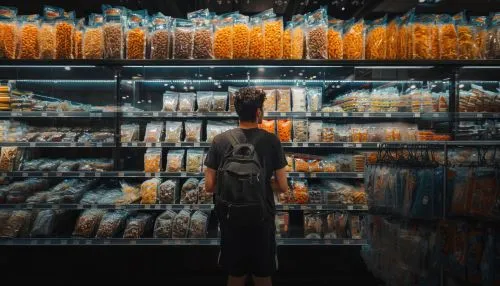
(Photo: Freepik)
Did you learn something new from this article?
Read also: