739

Author
infoAliment
Share on


Published on
2026 March 24
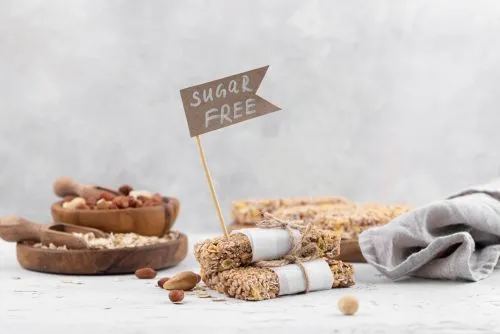
The modern consumer is looking for “cleaner” products, but does not always understand what they are actually buying. Labels such as “sugar-free,” “gluten-free,” or “no additives” have become powerful positioning tools, yet behind them there is often more marketing than substance.
“Sugar-free” does not automatically mean healthy. In many cases, sugar is replaced with sweeteners or syrups that maintain the caloric profile or even reinforce dependence on sweet taste. Similarly, “gluten-free” products are relevant strictly for individuals with a real intolerance; for the majority of consumers, the benefit is questionable, while the price is significantly higher.
As for “no additives,” the negative perception is largely emotionally driven. Not all additives are harmful; some are natural extracts or perfectly safe substances. Eliminating them can reduce shelf life or product stability, which introduces other trade-offs.
The reality is simple: these labels sell because they simplify decision-making. They quickly convey the idea of “better,” without requiring the consumer to analyze the product in depth.
For producers, the right strategy is not to exploit the trend, but to use it intelligently. Transparency, consumer education, and long-term product consistency are what build strong brands—not just attractive labels.
(Photo: Freepik)
Did you learn something new from this article?
Read also: