595

Author
infoAliment
Share on


Published on
2026 April 03
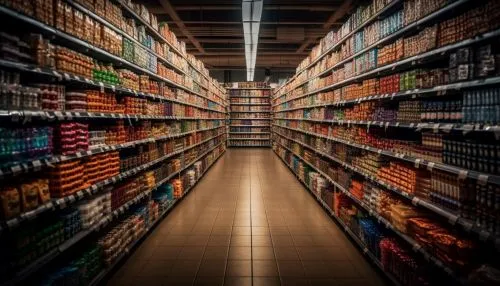
There is a form of abundance that is no longer connected to reality. An abundance that is constructed, calibrated, orchestrated.
In modern food retail, the shelf is no longer a consequence of stock. It is a statement. A promise. Sometimes, an illusion.
Products exist — but not always where they are supposed to be. Not in the warehouse. Not in the logistics chain. But within a digital system that has learned to create the perception of availability before physical existence.
This is the new form of efficiency: perceived stock.
In an ecosystem where speed of reaction matters more than consistency, retailers increasingly operate with predictive models. Algorithms determine what should be available, not what is actually available. The gap between the two becomes a space for optimization.
And, at times, for manipulation.
The customer sees the product. Searches for it. Waits for it. Even when it does not consistently exist within the physical chain.
This is not an error. It is a strategy.
Because shelf presence — even when fluctuating — creates habit. And habit creates demand. And demand, in turn, justifies supply.
The order has been reversed.
We no longer produce in order to sell. We simulate availability in order to generate sales.
In this subtle game, the shelf becomes a marketing instrument more powerful than any campaign. Because it does not promise. It suggests. And suggestion, in retail, is the most effective form of influence.
The question is no longer whether the product exists. But whether the perception of its existence is sufficient.
(Photo: Freepik)
Did you learn something new from this article?
Read also: