343

Author
infoAliment
Share on


Published on
2026 February 16
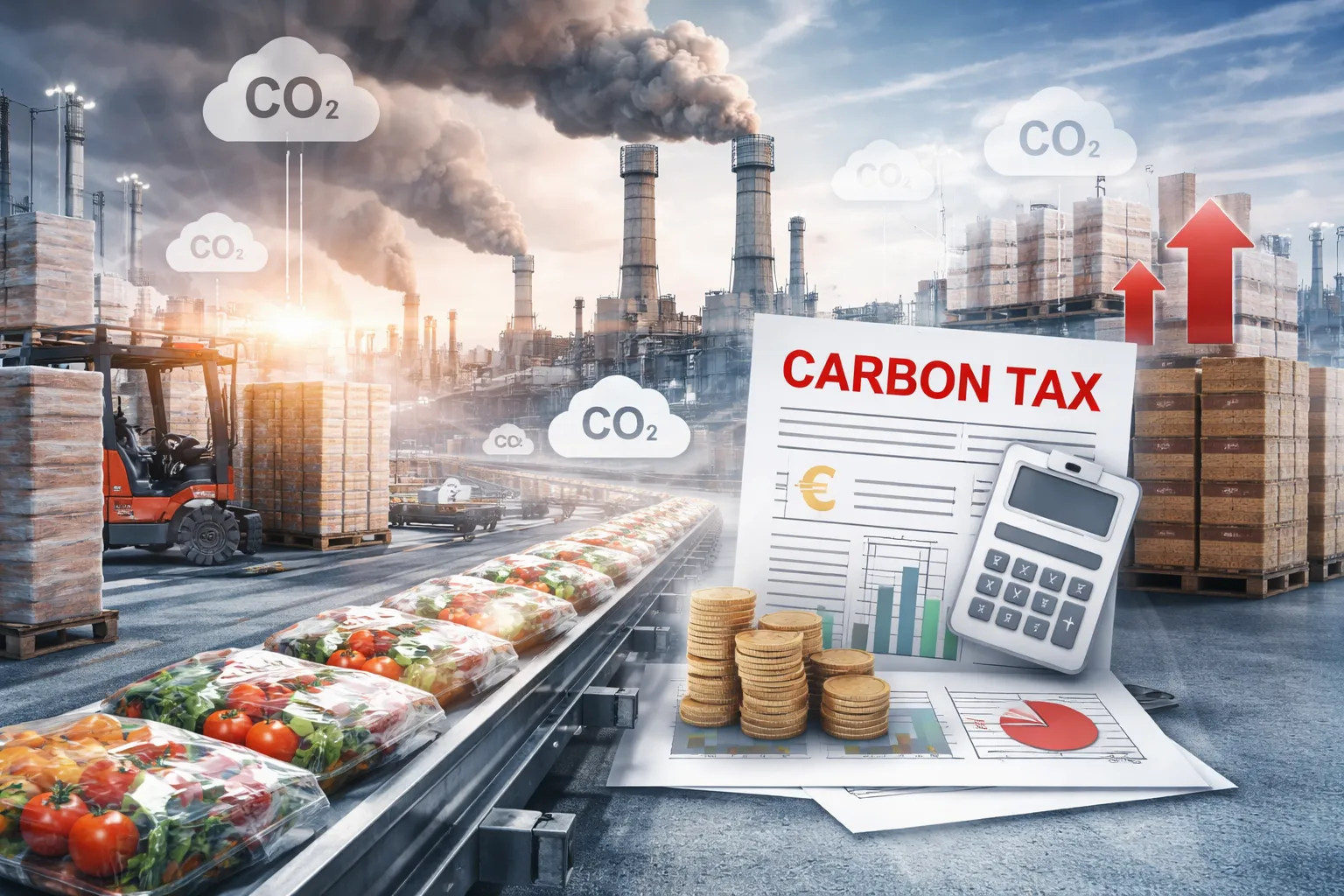
European climate policies are gradually changing the way the food industry operates by introducing costs associated with carbon emissions into the production and supply chain. Mechanisms such as CBAM (Carbon Border Adjustment Mechanism) are entering the operational phase and require importers to pay for the emissions generated by goods brought into the EU, at a level comparable to that borne by European producers.
These instruments are designed to reduce emissions and to prevent the relocation of production to countries with more permissive standards, transferring the cost of pollution to economic operators.
For the food sector, the impact does not appear directly only at the level of farms or processors, but across the entire chain: energy, transport, packaging, logistics. The calculation of the carbon footprint becomes part of operational management, and standards such as ISO dedicated to emissions reporting are increasingly used in the industry.
In the short term, companies are facing rising production and compliance costs. In the medium term, however, climate pressure is accelerating investments in energy efficiency, renewable energy, and logistics optimization.
In this context, competitiveness is no longer determined only by price and volume, but also by the ability to reduce emissions. Retailers and consumers already include ESG criteria in supplier selection, and climate reporting is becoming a commercial indicator, not just a sustainability one.
The food industry is thus entering a new stage: carbon becomes a real economic variable. Companies that calculate and reduce their footprint will gain easier access to financing, markets, and partnerships, while operators that delay adaptation risk losing competitiveness in an increasingly regulated environment.
(Photo: AI GENERATED)