347

Author
infoAliment
Share on


Published on
2025 November 05
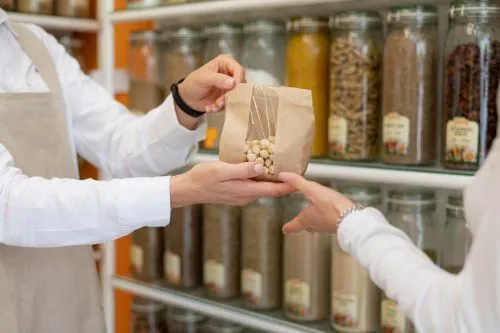
Sustainable Packaging – From Obligation to Competitive Advantage
Packaging is increasingly becoming a key sustainability criterion in the European food industry. According to the European Commission (2024), more than 40% of total plastic waste originates from food packaging, and the EU’s objective is to reduce it by 25% by 2030.
The new EU Packaging and Packaging Waste Regulation (PPWR 2024) introduces strict rules on recyclability, biodegradable materials, and uniform labeling. Producers will be required to use packaging that is easy to collect and reuse, and by 2030, all packaging on the European market must be fully recyclable.
In Romania, implementation is coordinated by the Ministry of Environment and the Environmental Fund Administration (AFM). Major food companies have already started transitioning toward innovative packaging solutions made from bioplastics, treated paper, and compostable materials. Although initial costs remain 10–25% higher, long-term savings and reputational benefits outweigh the investment.
Both FAO and the European Environment Agency (EEA) emphasize that packaging should not be viewed solely through the lens of recycling but also of food protection. A sustainable package must preserve freshness, microbiological safety, and nutritional value while simultaneously reducing food waste.
For Romania, the shift toward sustainable packaging represents a strategic opportunity to modernize the food industry. Integrating green standards, educating consumers, and strengthening partnerships with eco-material suppliers will transform packaging from a mere commercial necessity into a symbol of responsibility toward health and the environment.
(Photo: Freepik)
Did you learn something new from this article?
Read also: