307

Author
infoAliment
Share on


Published on
2025 December 09
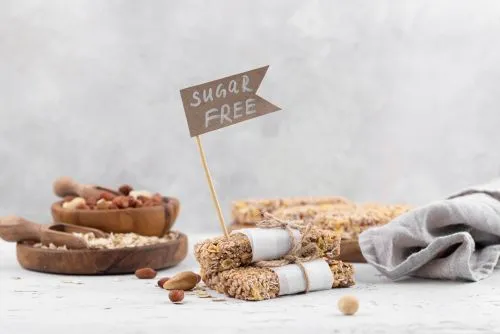
Interest in “sugar-free” foods has risen sharply in recent years, especially among those who want to reduce caloric intake, avoid blood-sugar spikes, or simply adopt a more balanced lifestyle. However, many products labeled as “zero sugar” may hide less healthy ingredients or create confusion for consumers.
1. What “sugar-free” actually means on the label According to European regulations, “sugar-free” means that the product contains less than 0.5 g of sugars per 100 g or 100 ml. Note: this does not exclude the use of sweeteners — natural or artificial.
Often, products labeled “zero,” “light,” or “no added sugar” may contain:
- corn or rice-derived syrups,
- polyols (erythritol, xylitol),
- synthetic sweeteners such as sucralose or acesulfame K.
2. The most common pitfalls “Without added sugars” ≠ sugar-free. A compote or smoothie can contain large amounts of natural fructose even if no sugar has been added. “Zero” products but high in calories. Some fitness bars or diet biscuits are sugar-free but loaded with fats or refined flours. Sweeteners with a laxative effect. Excessive use of polyols (sorbitol, maltitol) can cause digestive discomfort.
3. Healthy alternatives for sweetening For those who want to reduce sugar without giving up sweetness completely, there are natural and more body-friendly options:
- Stevia – a plant-based, zero-calorie sweetener;
- Erythritol – does not raise blood sugar and has a neutral taste;
- Date powder – ideal for desserts;
- Yacon syrup – a low-glycemic option.
These solutions can replace sugar in most homemade recipes and are generally better tolerated.
4. How to read the label correctly An informed consumer can quickly identify a truly healthy product. Here are a few guidelines:
- a short ingredient list without complicated names;
- avoiding products where sweeteners appear among the first ingredients;
- low simple carbohydrate content (<5 g per 100 g, if the goal is reducing sugar);
- the presence of fiber, which helps stabilize blood sugar.
“Sugar-free” products can be an excellent choice, but only when carefully evaluated. The label tells you everything: from the type of sweetener to the real nutritional value. By choosing consciously, we can avoid marketing traps and adopt a balanced diet without unnecessary compromises.
(Photo: Freepik)