283

Author
infoAliment
Share on


Published on
2026 January 22
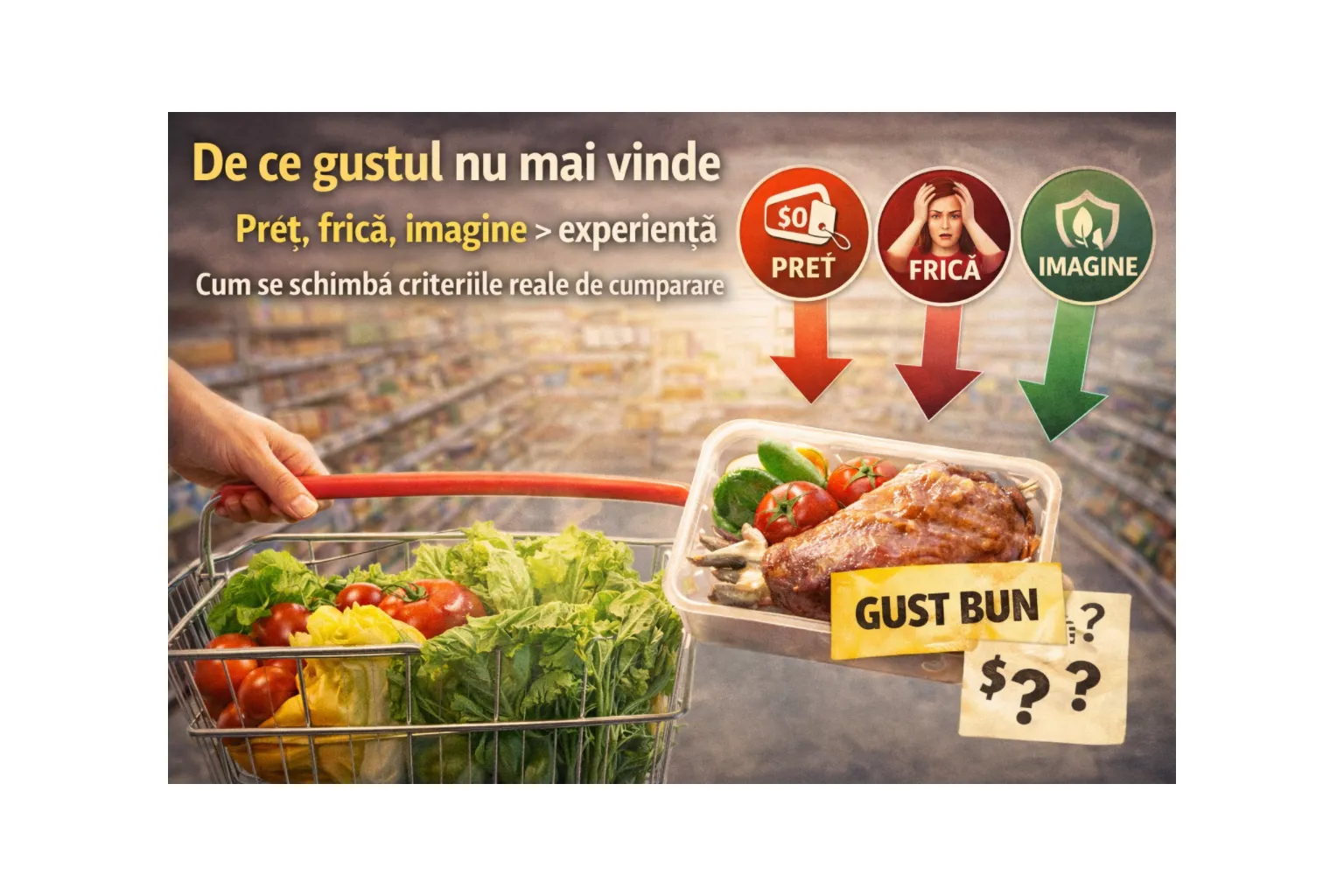
For decades, taste was the main criterion of differentiation in the food industry. A good product established itself naturally through the experience it offered consumers. Today, this logic has visibly eroded. Purchasing decisions are increasingly less driven by taste and more by a combination of price, fear, and image.
The constant rise in prices has shifted consumers’ attention from experience to budget. The shelf is now seen as a space for negotiation rather than discovery. In this context, taste becomes a secondary criterion—acceptable as long as the product is not “bad,” but rarely decisive.
Added to this is fear: fear of additives, calories, “unknown” ingredients, and potential health effects. Consumption has become increasingly defensive. Labels are scanned for risks, not for sensory promises. A product may be tasty, but if it does not convey safety or control, it is quickly removed from the basket.
Image completes this triangle. Packaging and messages such as “natural,” “simple,” or “free from” weigh more than the actual experience. Taste is validated after purchase, not before. If a product meets psychological criteria of safety and status, the sensory experience becomes a bonus rather than a condition.
As a result, real purchasing criteria are changing: not what people like, but what seems safe, affordable, and fair. For producers, this is a major challenge. Taste remains important, but it is no longer enough. In today’s market, a product must first reassure, then convince, and only at the end delight.
(Photo: AI GENERATED)
Did you learn something new from this article?
Read also: