267

Author
infoAliment
Share on


Published on
2026 January 29

HACCP remains the foundation of modern food safety, but in its classic form it is no longer sufficient for today’s industrial reality. Built on periodic analyses and fixed critical control points, the system was designed for a more stable and predictable production environment.
Today, supply chains are longer, raw materials more variable, and pressure on volumes and costs significantly higher. In this context, spot checks and retrospective documentation can no longer effectively prevent emerging risks.
The main limitation of the classic HACCP system is delayed reaction. Problems are often identified after they occur, rather than in real time. This is why the industry is moving toward continuous monitoring systems, integrated sensors, and automated data collection.
The next step is the integration of artificial intelligence. Algorithms can identify subtle process deviations, correlate data from production, environment, and logistics, and anticipate risks before they become critical. Food safety thus shifts from control to prediction.
HACCP does not disappear, but its role changes: it becomes the backbone of a much more dynamic, digital, and interconnected system. The future of food safety will not be defined by checklists and charts, but by the ability to understand data in real time.
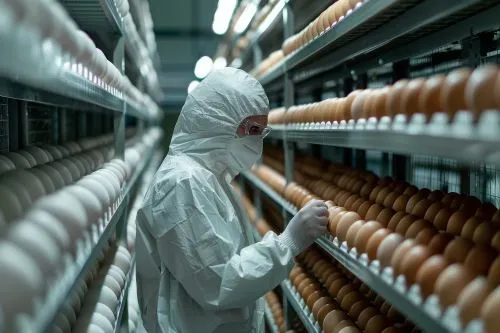
(Photo: Freepik)
Did you learn something new from this article?
Read also: