277

Author
infoAliment
Share on


Published on
2026 January 28

The traditional model of farms focused exclusively on raw material production is increasingly revealing its limitations. Price volatility, cost pressures, and dependence on external markets are turning simple agricultural production into a high-risk activity. In this context, processing becomes a strategic factor.
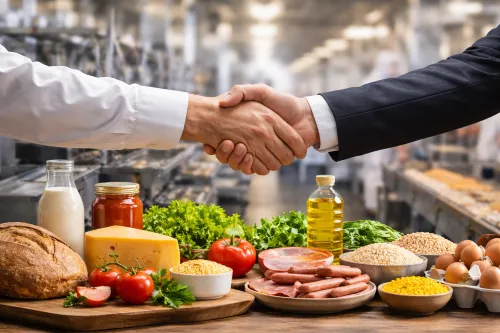
Integrating agricultural production with processing allows value added to be captured within the farm or the local chain. Cereals converted into feed, milk processed into finished products, or meat valorised through own processing units reduce exposure to market fluctuations and stabilise incomes.
Processing does not necessarily require immediate large-scale investments. For many farms, the first step is association or integration into a regional chain that ensures continuity and predictability. In the absence of this link, the farmer remains a raw material supplier with limited bargaining power.
At European level, agricultural policies and support schemes increasingly favour integrated production–processing–consumption chains. This direction reflects an economic reality: value is not created in the field, but in the finished product.
For Romanian farms, future competitiveness depends less on achieved yields and more on the ability to connect to processing. Without this link, agriculture remains vulnerable; with it, it can become sustainable and predictable.
(Photo: Freepik)
Did you learn something new from this article?
Read also: