521

Author
infoAliment
Share on


Published on
2025 October 28
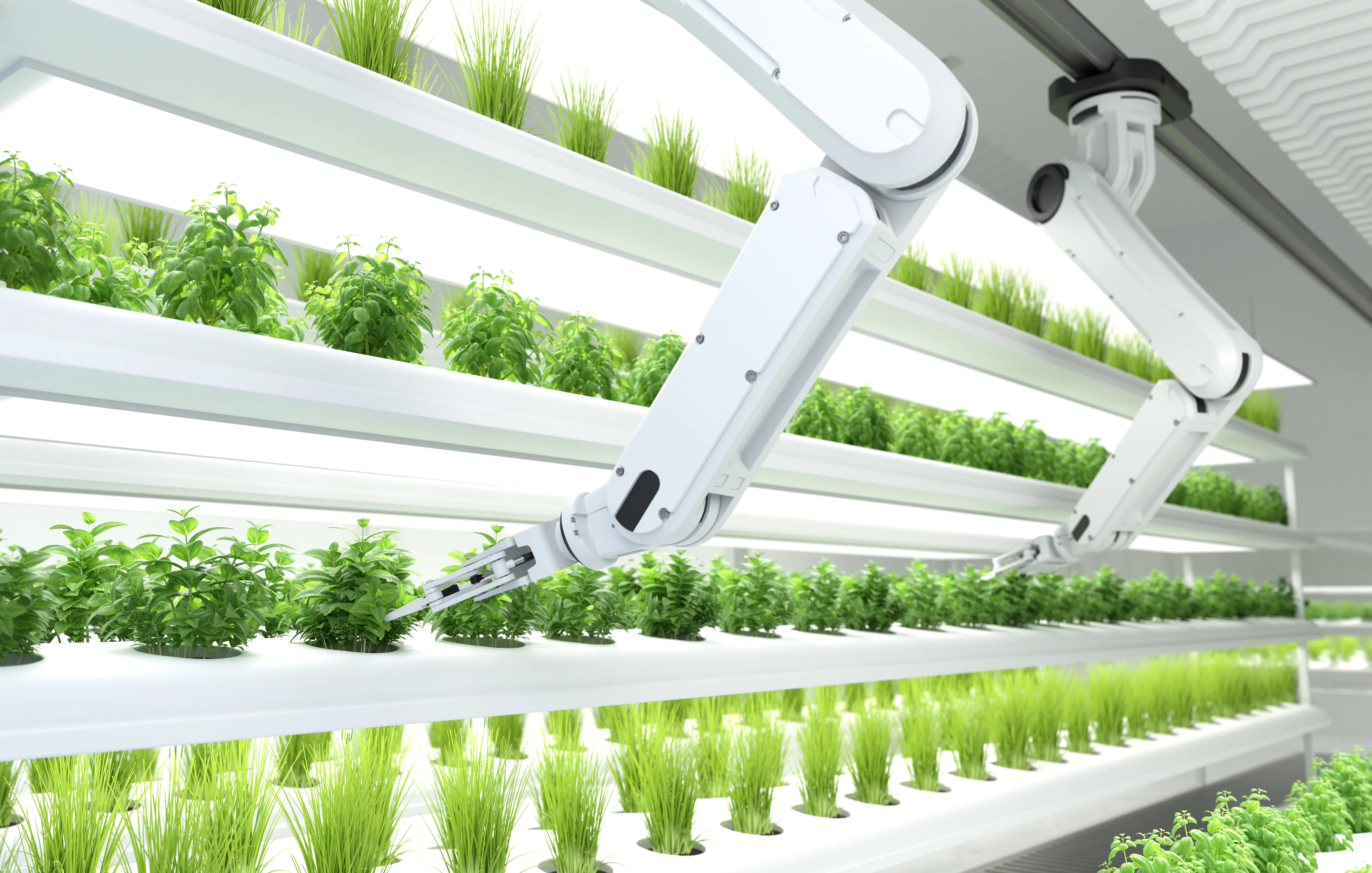
The digital transformation of agriculture and the food industry is entering a new stage: that of the digital twin. This technology, which enables the creation of a virtual replica of processes, equipment, or products, is fundamentally changing the way farmers and processors can plan, monitor, and optimize production.
According to the European Commission, the digital twin concept will become a standard across European agri-food chains by 2030, in line with the Digital Europe Programme and the Farm to Fork 2.0 strategy. Romania is among the countries eligible to pilot digital traceability systems, and industrial applications are already becoming reality in major food processing plants.
In practical terms, a digital twin integrates data from sensors, cameras, processing software, and artificial intelligence to create a digital copy of a physical system. In agriculture, this technology can simulate in real time the effects of irrigation, fertilization, or climate change on yields. In processing, it enables energy flow optimization, waste reduction, and predictive maintenance planning for equipment.
The World Economic Forum (WEF) estimates that the use of digital twins can reduce production costs by up to 20% and increase energy efficiency by 15%. In the food industry, the technology is already used to simulate pasteurization, packaging, and cold-chain logistics.
According to Eurostat, Romania has one of the fastest agricultural digitalization rates in Eastern Europe, yet the integration level within the food industry remains low. The lack of IT specialists in agri-food sectors limits expansion, even though EU funds (PNS and Horizon Europe) can cover up to 80% of implementation costs.
The World Bank identifies the digital twin as a key tool for smart agriculture, capable of anticipating production risks and optimizing resource use. At the same time, the OECD warns that the success of such models depends on data quality and system interoperability.
Romania has the opportunity to become a regional hub for agri-food digitalization if it succeeds in connecting data infrastructure, innovation centers, and the processing industry. In an increasingly predictive economy, the digital twin is no longer a technological experiment — it is the new reality of performance.
(Photo: Freepik)
Did you learn something new from this article?
Read also: