279

Author
infoAliment
Share on


Published on
2025 December 10
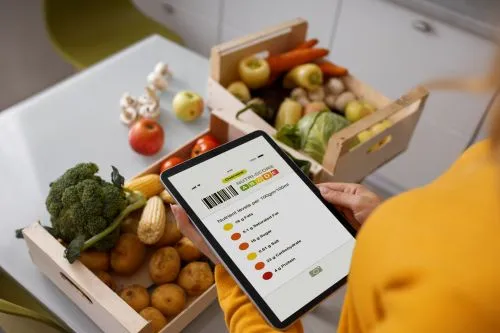
From the barcode to the QR code, the food label has evolved constantly. But the new global trend is taking packaging to a whole new level: smart labels, capable of providing real-time information on freshness, the cold chain, and food safety. These technologies are transforming the shopping experience and reducing product losses across the entire chain — from the factory to the consumer’s refrigerator.
What is a smart label? It is a system integrated into the packaging that includes physical, chemical, or biological sensors. These sensors can:
- detect breaks in the cold chain;
- monitor temperature fluctuations;
- indicate the real level of spoilage of meat or fish;
- signal the oxidation of oils;
- warn when the product is no longer safe to consume.
Most commonly, thermochromic strips, gas micro-sensors (detecting ammonia, volatile compounds), or indicators that change color depending on freshness are used.
How it changes the way we buy food
- You can see real freshness, not just the printed date The expiration date remains a general indicator, but the smart label shows whether the product has been exposed to incorrect temperatures or whether spoilage has already begun.
- More confidence in the cold chain Meat, fish, and dairy products are the most sensitive to temperature variations. A smart label becomes a guarantee of quality.
- Reducing food waste Consumers often throw away good products simply because they are “close to the date.” With a real freshness indicator, waste decreases by 20–30% in some European studies.
The European Commission’s “Farm to Fork” strategy encourages digitalization of the food chain and smart packaging solutions. In retail stores in France and the Netherlands, pilot projects already exist with chicken meat packed in trays with smart indicators. Consumers react positively, and the return rate visibly decreases.
What processors and retailers in Romania can do
- test sensor-equipped packaging for fresh meat and ready-to-eat products;
- use the smart label as a premium competitive advantage;
- integrate QR codes offering information about origin, inspections, temperatures;
- adopt visual indicators that are easy to understand (color, shape, simple codes).
Home electronics are evolving simultaneously with the food industry. Some premium refrigerators can scan smart labels, monitor freshness, and send notifications when a product needs to be consumed.
For modern consumers, food becomes an ecosystem: smart product + smart kitchen + informed decisions.
Conclusion Smart labels are not a technological fad but a major driver of transformation in the food industry. They increase safety, transparency, and consumer trust, reduce losses, and can position Romanian producers at the forefront of European innovation.
(Photo: Freepik)