537

Author
infoAliment
Share on


Published on
2025 December 12
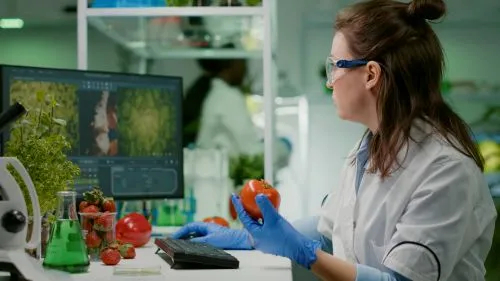
Predictive models for Salmonella, E. coli, and molds — already in use in some European slaughterhouses
Food safety is entering a new phase: the shift from reactive control (post-production testing) to predictive prevention. Artificial Intelligence (AI) enables the estimation of contamination risk with Salmonella, E. coli, or molds before they occur, reducing losses, recalls, and risks to consumers.
Why predictive algorithms?
Traditionally, factories and slaughterhouses rely on:
- periodic microbiological testing,
- manual hygiene monitoring,
- HACCP plans based on experience.
While useful, these methods cannot anticipate the subtle variations that lead to contamination. AI can simultaneously analyze thousands of variables—temperature, humidity, transport times, slaughter speed, supplier history, sensor activity—detecting patterns invisible to humans.
How AI contamination models work
- Data collection: IoT sensors across processing lines, cold rooms, and handling areas transmit real-time data.
- Model training: algorithms are fed with years of data on confirmed contamination events.
- Risk prediction: the system generates a risk score for each batch, shift, or processing stage.
- Preventive alerts: operators receive notifications before problems arise, enabling rapid intervention (disinfection, temperature adjustment, flow reduction, etc.).
Real-world application in European slaughterhouses
In several slaughterhouses in Germany, the Netherlands, and Denmark, AI models for Salmonella risk detection are already implemented. These systems have led to:
- 20–35% reduction in positive batches,
- optimization of decontamination zones,
- automatic adjustment of processing flow based on risk level.
In the dairy industry, neural networks train mold growth models in ripening rooms, allowing prediction of conditions under which colonies may rapidly expand.
What types of contamination can be predicted?
- Pathogenic bacteria: Salmonella, E. coli O157:H7, Listeria.
- Molds and yeasts: particularly relevant for cheeses, bakery products, and ready-to-eat foods.
- Chemical contamination: residues, packaging migration, deviations in thermal processing.
- Physical contamination: increased risk when sensors detect abnormal vibrations or machine behavior.
Impact on the industry
- Fewer product recalls: AI can flag risk before products leave the facility.
- Advanced traceability: each batch receives a digital risk profile.
- Audit and HACCP efficiency: reports are automatically generated from data.
- Improved reputation: fewer major safety incidents.
AI does not replace engineers—it gives them a prevention tool that was previously impossible. Predictability is becoming the new frontier of food safety, and slaughterhouses and factories that adopt these solutions become more competitive, more efficient, and safer for consumers.
(Photo: Freepik)
Did you learn something new from this article?
Read also: