457

Author
infoAliment
Share on


Published on
2025 November 20

Artificial intelligence is becoming a central tool in food quality control, transforming how the food industry detects risks, optimizes processes, and ensures compliance with European standards. According to OECD analyses, the use of AI in visual inspection, composition analysis, and cold chain monitoring reduces human error and increases process predictability. Automated systems can identify surface defects, contaminants, and deviations from specifications with greater accuracy than traditional methods.
FAO highlights the role of AI in preventing food waste through real-time monitoring of storage and transport conditions. Advanced algorithms can anticipate product deterioration based on temperature, humidity, and transport history, allowing rapid adjustments in the logistics chain. At the same time, the European Commission promotes the use of smart technologies within strategies related to food safety and industry digitalization, particularly through investments available under Horizon Europe programs.
In Romania, more and more processors are adopting automatic quality analysis systems integrated with production lines. These systems reduce reaction time in cases of non-compliance and provide the data required for periodic audits. AI is thus becoming a strategic element for competitiveness, traceability, and consumer confidence in food products.
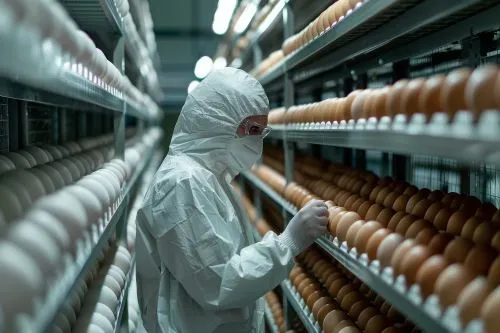
(Photo: Freepik)
Did you learn something new from this article?
Read also: