248

Author
infoAliment
Share on


Published on
2026 January 22
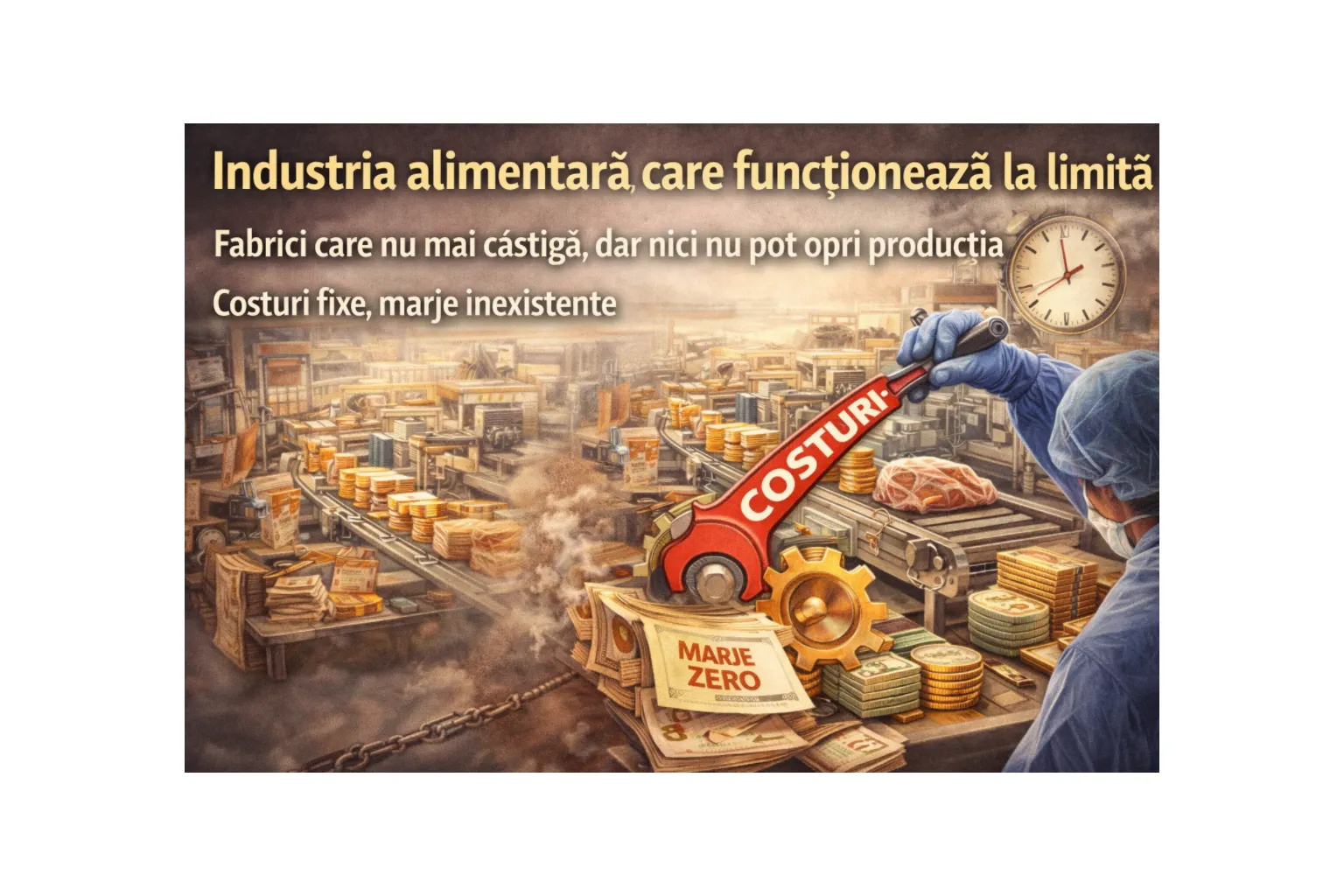
A large part of the food industry today no longer operates for profit, but for survival. There are factories that no longer make money, yet cannot afford to stop production. This is the reality of a sector caught between high fixed costs and margins that are approaching zero.
Energy, labor, maintenance, regulatory compliance, and logistics generate constant expenses, regardless of sales volumes. At the same time, price pressure from retail and from consumer behavior severely limits the ability to adjust prices. Rising costs can no longer be fully passed on to the final price.
Under these conditions, many factories operate with minimal or even negative margins, relying on volume and continuity. Stopping production would mean even greater losses: terminated contracts, lost staff, and restart costs that are difficult to sustain. As a result, operation becomes an exercise in endurance rather than development.
Investments are postponed, innovation is limited, and decisions are made defensively. The focus is no longer on growth, but on maintaining cash flow and avoiding blockages. Any imbalance—a sudden increase in costs or a drop in demand—can quickly destabilize the entire system.
The food industry is now operating at the limit, in a fragile equilibrium. Without structural adjustments, a realistic recognition of costs, and a more balanced relationship between producers, retail, and consumers, this model becomes unsustainable in the medium term.
(Photo: AI GENERATED)
Did you learn something new from this article?
Read also: