337

Author
infoAliment
Share on


Published on
2025 December 11
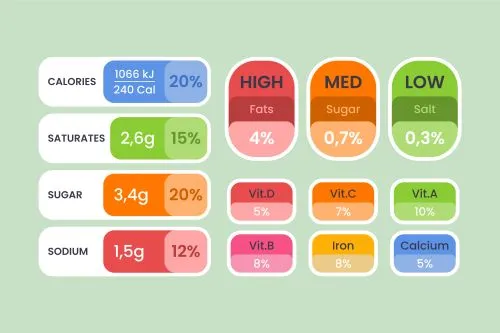
The European NutriScore system, already implemented in several Western European countries, is currently undergoing a broad update process. The new version—informally known as NutriScore 2.0—introduces a revised algorithm that places greater emphasis on the level of processing, the presence of sweeteners, and the product’s real nutritional quality. Although labeling is not yet mandatory in all EU countries, an increasing number of food companies are already assessing the impact of the new rules in order to adapt in advance.
Why was an updated NutriScore needed?
The initial version of the system was praised for its simplicity but criticized for allowing some ultra-processed products to obtain favorable scores, while natural foods such as olive oil received lower ratings due to their caloric density. The reform aims precisely to address these inconsistencies and focuses on:
- clearer differentiation between natural foods and ultra-processed products;
- adjustments to the way fats and sugars are calculated;
- re-evaluation of products high in sweeteners or additives;
- stricter classification of processed meat.
What NutriScore 2.0 brings
Although each country may adapt its implementation, the main proposed changes include:
1. Additional penalties for sweeteners and added sugar Products containing artificial or polyol sweeteners will receive lower scores than under the current system, even if they are low in calories. The rationale is to encourage a reduced dependence on sweet taste.
2. Reclassification of ultra-processed foods Energy drinks, snacks, certain breakfast cereals, and industrial desserts will drop in score, reflecting their high level of processing and ingredient alteration.
3. Reassessment of products with “good” fats Olive oil, nuts, seeds, and avocado will receive a more accurate score reflecting their nutritional benefits, despite their high caloric density.
4. Processed meat will be classified more strictly Cold cuts, canned meat, and heavily processed products will receive additional penalties for salt and additive content.
Impact on Romanian processors
Although Romania has not officially adopted NutriScore, many companies exporting to the EU are directly concerned. NutriScore 2.0 may influence:
Recipe reformulation Producers of cereals, snacks, flavored yogurts, or beverages may be forced to reduce sugar, sweeteners, and additives to avoid a D or E rating.
Shelf positioning In Western retail, NutriScore is already used as a marketing tool. A poor score can reduce product visibility and even sales volume.
Transparency toward consumers An increasing number of consumers demand easy-to-understand information, and NutriScore addresses this need through a simple visual code.
What the Romanian industry should do
- Internal recipe audits to identify products vulnerable to the new rules.
- Investment in R&D for more nutritionally balanced alternatives.
- Comparative analysis with competing EU products.
- Transparent communication regarding improvements made.
NutriScore 2.0 is not merely a labeling change, but a transition toward a more responsible food industry aligned with European priorities. Romania can gain competitiveness if producers adopt these standards early, even before they become legally mandatory.
(Photo: Freepik)