350

Author
infoAliment
Share on


Published on
2025 November 26
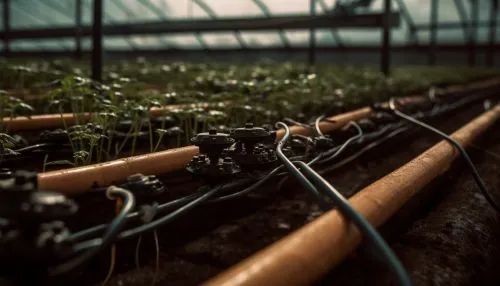
Improving efficiency in horticulture increasingly depends on access to modern irrigation systems. According to FAO (2024), farmers who adopt drip or micro-sprinkler irrigation can reduce water consumption by 30–50% while maintaining an optimal level of soil moisture. This advantage is essential in the context of climate change and precipitation variability.
In Romania, INS data (2024) show that only about 15% of horticultural land benefits from modern irrigation—an increase compared to 2020, but still below the European average. Funding programs managed by the Ministry of Agriculture (MADR) and AFIR support investments in energy-efficient equipment, buffer reservoirs, and digital solutions for monitoring water use.
Drip systems deliver water directly to the root zone, reducing evaporation and improving nutrient uptake. In vegetable crops—tomatoes, peppers, cucumbers—FAO studies show production increases of 20–30% when irrigation is managed in a controlled manner. In orchards, micro-sprinkling reduces water stress and stabilizes fruit quality during drought periods.
Another advantage is the possibility of fertigation, through which nutrients are distributed evenly and with precision. This technique reduces fertilizer losses and lowers the risk of groundwater contamination.
Current challenges include the initial investment cost, the need for regular maintenance, and dependence on local water infrastructure. However, upgrading irrigation systems remains one of the most effective solutions for increasing productivity, stabilizing crop performance, and reducing climate-related risks.
In the medium term, expanding modern irrigation in horticulture can improve the competitiveness of Romanian farms and contribute to a more sustainable use of water resources.
(Photo: Freepik)
Did you learn something new from this article?
Read also: