507

Author
infoAliment
Share on


Published on
2025 November 12
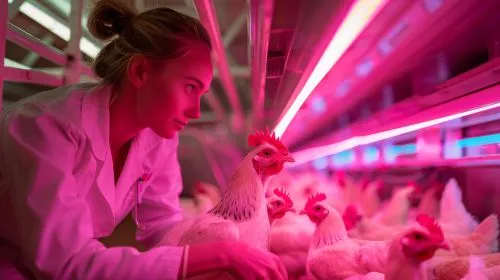
The meat industry is increasingly adopting green technologies that reduce its carbon footprint and optimize resource use. According to Eurostat (2024), the food sector accounts for 12% of total industrial emissions in the European Union, with meat processing representing nearly one-third of that figure.
The new sustainability standards require reductions in water, energy, and chemical consumption—without compromising the quality of the final product. Technologies such as residual heat recovery, advanced wastewater filtration, and the use of green energy are already being implemented in most Western European countries.
In Romania, investments in energy efficiency and eco-friendly technologies are supported through AFM, PNRR, and AFIR, with over €150 million allocated to the agri-food sector between 2023 and 2027. The projects focus on modernizing slaughterhouses, automating production lines, and installing photovoltaic systems.
The FAO and EEA recommend that the food industry adopt a “zero waste” model, reusing organic waste for biogas or fertilizers. This approach not only reduces production costs but also strengthens the sector’s image as a clean industry.
For Romanian processors, the green transition is no longer optional—it is a prerequisite for access to the European market. Technological innovation and resource efficiency are becoming key tools for competitiveness, profitability, and environmental protection.
(Photo: Freepik)
Did you learn something new from this article?
Read also: